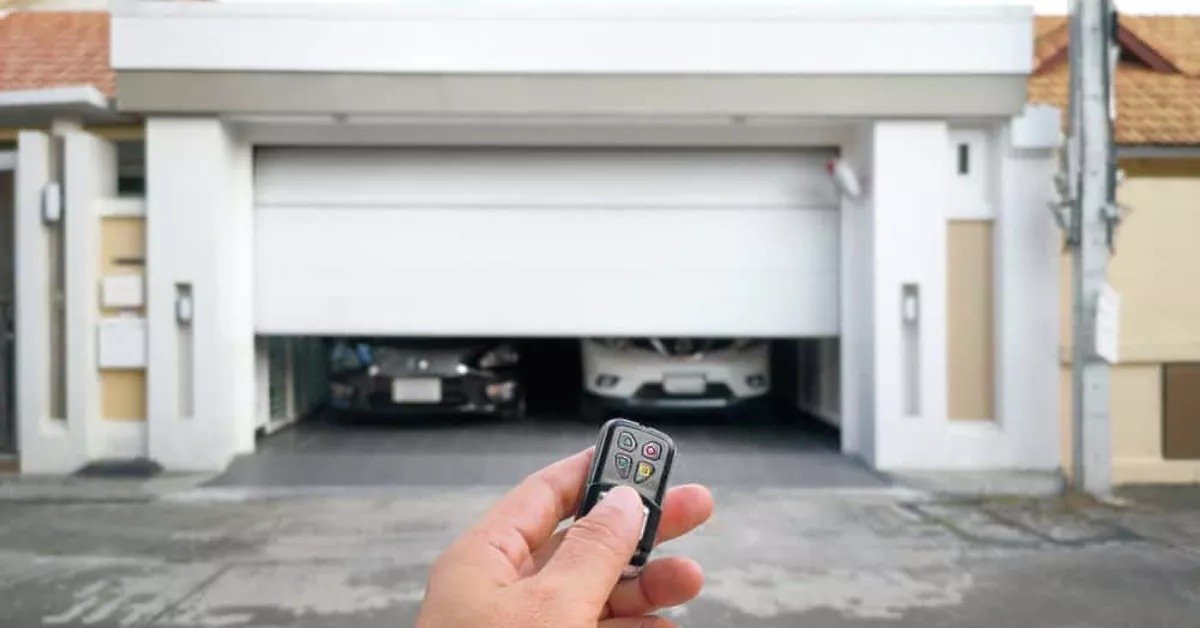
Few things feel as unsettling as pulling into your driveway, or waking up at night, to find your garage wide open when you know you closed it. When your garage door opens by itself, your car, tools, and family are left exposed, and in Las Vegas that open door also lets in heat, dust, and desert critters. The good news is that this problem almost always has a clear cause, and many of those causes are simple to fix.
In this guide, we break down the seven most common reasons a garage door randomly opens and walk you through what you can safely check on your own. You will also learn when the problem needs hands-on help from a trained technician. The team at Apex Garage Doors LLC handles these calls every week across the Las Vegas Valley, so the tips below come from real jobs, not guesswork.
7 Common Reasons Your Garage Door Opens by Itself
1. A Stuck or Faulty Remote
The most common cause is also the easiest to overlook. A remote clipped to a sun visor, tossed in a bag, or sitting in a cup holder can get pressed without you noticing. Over time, the buttons on older remotes can also stick or short out inside, which sends random signals to the opener. This kind of garage door remote malfunction can trigger the door at odd hours, even when nobody is near it.
Start by removing the batteries from every remote you own, including spares in drawers and other vehicles. If the door stops opening on its own, put the batteries back one remote at a time to find the bad one. A remote with a cracked case, a sticky button, or water damage should be replaced rather than repaired, since new remotes are affordable and easy to program.
2. Signal Interference From a Neighbor’s Opener
Many older openers use fixed codes set by a row of small dip switches. If a neighbor has an opener on the same frequency with the same switch pattern, their remote can operate your door. This is a big reason a garage door opens on its own in older neighborhoods where many homes were built at the same time with the same opener brand. Some nearby radio sources and security devices can cause similar trouble.
Check the back of your opener motor and the inside of your remote for those tiny switches. If you see them, change the pattern on both so they match each other but nobody else. The better long-term fix is upgrading to a modern opener with rolling code technology, which changes the code every time you press the button and blocks both interference and code theft.
3. A Short in the Wall Button or Wiring
Your wall button connects to the opener with thin low-voltage wire that runs along walls and ceilings. If that wire gets pinched by a staple, chewed by rodents, or worn where it rubs against a sharp edge, the two strands can touch. When they do, the opener reads it as a button press. Garage door wiring problems like this often show up after someone has done work in the garage or during hot afternoons when materials expand.
To test this, disconnect the wires from the back of the wall button or from the terminals on the opener. If the random opening stops, the issue is in the wiring or the button itself. Replace a worn wall button and run fresh wire if you find damage. If you are not comfortable working around the opener, this is a quick job for a technician.
4. Misaligned or Dirty Safety Sensors
Sometimes the door is not truly opening by itself. Instead, it starts to close and then reverses back up, which looks like it opened on its own when you are not watching. Garage door safety sensors sit a few inches above the floor on each side of the door and send an invisible beam across the opening. If that beam is blocked or broken, the opener reverses the door to protect people, pets, and cars.
Common garage door sensor problems include dusty lenses, a bracket knocked out of place, direct sunlight hitting the receiver, or a loose wire. Wipe both lenses with a soft cloth, check that the indicator lights stay steady, and gently adjust the brackets until they line up. In Las Vegas, strong afternoon sun can shine straight into a west-facing sensor, so a small sun shield can make a big difference.
5. A Failing Circuit Board
The logic board is the brain of your opener. Power surges, monsoon storms, and years of heat inside a closed garage can damage it. A failing board may send open commands at random, ignore your remote, or flash error codes. This is one of the more frustrating garage door opener problems because it often comes and goes without warning.
Unplug the opener for about a minute to reset it, and connect it to a surge protector if it is not on one already. If the random activity continues after you have ruled out the remotes, wiring, and sensors, the board likely needs to be replaced. On older units, replacing the whole opener can sometimes make more sense than buying a new board.
6. Smart Opener Settings or Shared Access
Wi-Fi openers add great convenience, but they also add new ways for the door to move. A scheduled open time, an auto-open feature tied to your phone’s location, a smart home routine, or a family member with app access can all make a garage door open automatically when you least expect it. Old keypad codes given to contractors, dog walkers, or past tenants may also still be active.
Open your opener’s app and review the activity history first, since most apps show exactly when and how the door was triggered. Then check schedules, location settings, and connected smart home routines, and remove any users or codes you no longer need. Updating your Wi-Fi password and the app’s firmware also closes common security gaps.
7. Incorrect Travel Limit or Force Settings
Your opener has limit settings that tell it where to stop when closing and force settings that control how hard it pushes. If the down limit is set too low, the door presses into the floor, senses resistance, and travels back up. Settling concrete, new flooring, or a worn bottom seal can throw these settings off over time.
Most openers have adjustment screws or buttons on the motor unit, and the owner’s manual explains how to use them. Make small changes and test the door after each one. You can also lay a flat 2×4 board under the door; if the door does not reverse after touching it, the safety setting is off and needs attention right away.
Quick Garage Door Opener Troubleshooting Steps
When a door keeps moving on its own, work from the simplest fix to the most complex. Pull the batteries from all remotes, disconnect the wall button, clean and align the sensors, and check the app history if you have a smart opener. Following this order of garage door opener troubleshooting saves time because the cheapest causes are also the most common.
While you troubleshoot, keep your home secure. With the door fully closed, you can unplug the opener overnight or use the manual slide lock if your door has one. Just remember that a door that is unplugged or locked will not respond to your remote, so plan ahead before you leave the house.
When to Call for Garage Door Repair
Some fixes are safe for homeowners, but others are not. If you have tried the steps above and your garage door opens by itself again, or you notice burning smells, grinding noises, sparks, or a door that moves unevenly, it is time to stop and call for help. Electrical faults and spring tension issues can cause injuries or damage to the door, the opener, or your vehicle.
A trained technician can test the circuit board, trace hidden wiring, reset limits correctly, and spot worn parts before they fail. Apex Garage Doors LLC arrives with the right tools and replacement parts, so most problems are solved in a single visit. Fast garage door repair matters most when an open garage puts your home and family at risk.
Frequently Asked Questions
Why does my garage door open by itself in the middle of the night
The most common causes are a stuck remote button, a short in the wall button wiring, a smart opener schedule, or signal interference from a nearby remote. Checking the app history and removing remote batteries usually narrows it down quickly.
Can a neighbor’s remote open my garage door?
Yes, if both openers use older fixed-code technology with matching settings. Changing the dip switch pattern helps, but upgrading to a rolling code opener is the safest fix.
Can bad sensors make my garage door go back up?
Yes. If the sensors are dirty, misaligned, or hit by direct sunlight, the opener thinks something is in the way and reverses the door, which can look like it opened on its own.
Is it safe to keep using a garage door that opens randomly?
It is not a good idea. A door that moves without warning is a security risk and can injure people or pets. Unplug the opener and keep the door locked until the cause is found.
Should I repair my opener or replace it?
If your opener is newer and the problem is a remote, sensor, or wire, a repair is usually enough. If it is old, uses fixed codes, or has a failing circuit board, Apex Garage Doors LLC can help you decide whether a replacement is the smarter choice.
Stop Your Garage Door From Opening on Its Own Today
Don’t leave your home exposed while you hope the problem goes away. If your garage door opens by itself and you cannot find the cause, our local team is ready to help 24/7 across Las Vegas, Henderson, Summerlin, Spring Valley, Enterprise, and nearby areas. Book fast and affordable garage door repair in Las Vegas with Apex Garage Doors LLC by calling (725) 232-5237, and get your garage secure again.